Rekindled
In 2004, due to a job change, I switched from commuting to work via public transport to driving each day. The biggest change this made to me was the sudden loss of time I had previously largely used for reading (and, it should be said, playing Game Boy). My book consumption dropped significantly; my only other regular (how to put this delicately? “porcelain-based”) reading time given over to catching up with Entertainment Weekly and Private Eye.
But the pendulum is shifting back again now I’m in San Francisco. The route betwixt home and office is now more easily travelled by Bart and Muni than private automobile. Thus—hurrah!—I have time to consume the printed word once more.
Given that I’m a lazy unfit bastard, though, the thought of carting around weighty chunks of paper was less tempting than ever. I glanced at Amazon’s Kindle e-book reader, but the idea of paying $400 for a device whose sole purpose was to get me to give more money to Amazon didn’t seem to make much sense, not matter how tempting and shiny the Kindle might be. But within a week, after unexpectedly earning a decent chunk of change from Amazon, I decided to pull the trigger. I am nothing if not an irrational sucker for a shiny gadget.
A month later, I’ve finished reading three books on the device and the novelty has worn off, so here’s my experience so far.
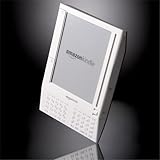

First up, the things that I knew because every review mentions them: The screen is excellently clear and comfortable to read (the variable font size means you can switch to larger print when you're tired), and the page-change lag is negligible. The built-in wireless networking works just grand, meaning you can surf Amazon's bookstore and download new books wherever you are (within the US). And yes, the Next/Previous Page buttons are as annoyingly easy to hit as has been reported. It's not too bad when you're sitting down and reading, but when trying to get comfortable lying on your side I've usually had to page back and forward a bit to correct for accidental nudges.
That said, the ease of page-flipping illustrates an unexpected advantage of the Kindle beyond simple lightness: It’s much easier to read than a regular book when you’re standing on a train with one hand gripping a pole for support. You keep the Kindle in the other hand, your thumb poised over the “Next Page” button, and can flip without moving more than that one knucklemuscle. (The exception to this are books with footnotes, which require a somewhat frustrating hyperlinky jump to read.)
Amazon’s book selection is decent, if not comprehensive. Maybe half of the books I’ve searched for are available. Some areas are noticeably lacking—Computer textbooks, which would benefit massively from being searchable and lightweight, are missing due to the lack of a monospaced font on the Kindle. Interestingly, my reaction to books that are not available is that they are effectively dead to me. I’d love to read them, but now that I own a Kindle, I don’t think I’d want to buy deadtree again.
For me, the biggest surprise was something that seems to have been played down on Amazon’s site, but is a killer feature to me. For every book in the Amazon Kindle store, you can send a free sample to the Kindle. The sample usually includes the first chapter or two of the book—more than you might be able to skim in a regular bookshop—enabling you to better evaluate the title before purchasing, which Amazon has made characteristically seamless; at the end of each sample is a one-click link which will charge your credit card and download the book to the Kindle within a minute. As I type this, my backpack holds eleven samples of books I’m interested in, effectively acting as a queue so I need never be without reading material.
Perhaps surprisingly, given my EFF-loving copylefty fair-use tendencies, the DRM imposed by Amazon doesn’t bother me too much (summary: your purchases are tied to your account, so you cannot “gift” or “loan” books to others or read them on any device other than a Kindle). Unlike music, which I want to own so I can it enjoy over and over for the future, I tend to read a book once then stick it on a shelf, resulting in, as part of the moving process, the dumping of many boxes of once/never-read books at the local Goodwill. And given that Kindle ebooks are always cheaper than Amazon’s already heavily-discounted prices, I’m even less worried about the effectively ephemeral nature of the licensed ebook.
In summary, if you asked me if I recommended the device, I would offer a solidly warm yes with the following caveats: First, you should browse Amazon’s Kindle store first to work out what proportion of books you’re interested in are available. Secondly, you should be comfortable spending $360 on a device that will undoubtedly drop in price and/or be superseded by improved hardware within a year (also known as “being an iPod owner”). And finally, if you’re of a collectory bent, recognize that the satisfaction of a stuffed bookcase cannot be felt with e-ink and bits in flash memory.
But for me, the Kindle has reignited my love of reading, and I look forward to seeing where it takes me next.